Aliso Canyon homeowners: Get up to $14,000 in heat pump rebates! See if you qualify.

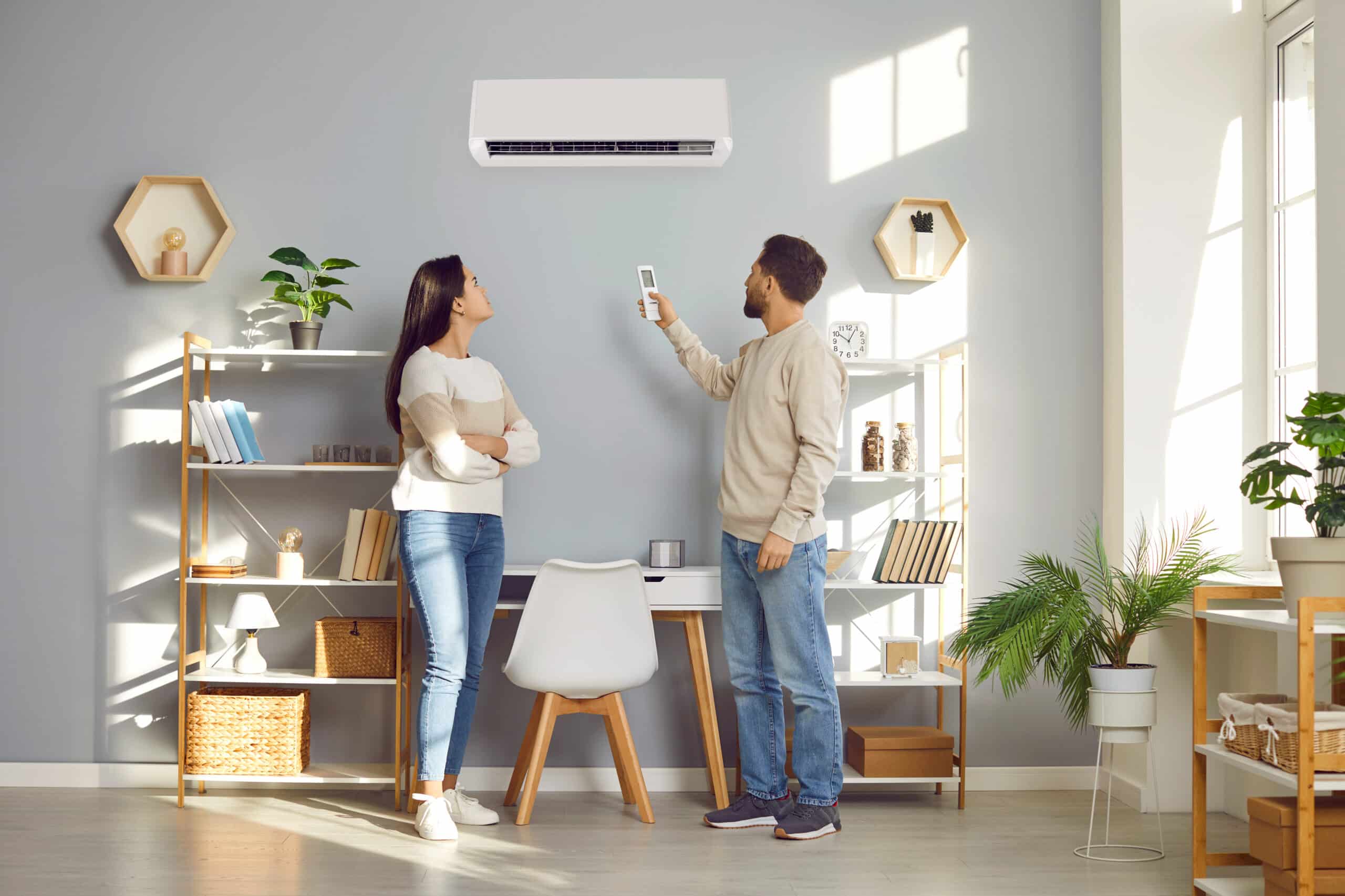
When it's 75 degrees outside but your air conditioner won't stop running, the problem might not be what you think.
| Blog Summary: If your air conditioner continuously runs and never reaches the temperature on your thermostat, the most likely causes are restricted airflow due to a dirty air filter or evaporator coil, or low refrigerant. If it reaches temperature but the outdoor unit keeps running anyway, a stuck contactor or a thermostat problem is the more likely culprit. |
Fall in Los Angeles is supposed to be relief time, right? Temperatures drop from the 80s to the mid-70s, you finally get to open your windows, and your AC should be taking a well-deserved break. But if your system is still running constantly when it’s 75°F outside, something’s definitely wrong.
This isn’t about the weather being too hot. This is about your AC working way harder than it should to do a job that should be easy. And it’s costing you money every minute it runs unnecessarily.
Here’s the thing most people don’t realize: Your air conditioner doesn’t just look at the outdoor temperature and decide whether to run. It’s trying to maintain your indoor temperature setting, usually around 72-75°F. When your AC runs constantly on a 75°F day, it means it can’t achieve or maintain that indoor temperature. On a mild day, your system should cycle on and off easily. If it’s running nonstop, it’s struggling with something that should be simple.
One exception: If you have a variable-speed system, long run times are normal. These systems run at low speed for extended periods instead of cycling on and off at full power, which is how they keep temperature and humidity levels steady. With a variable-speed system, the question isn’t how long it runs, it’s whether your home reaches the temperature you set.
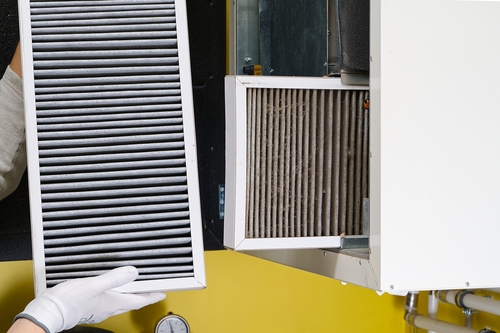
Your evaporator coils, condenser coils, or air filter might be so dirty that your system can’t transfer heat effectively. It’s like trying to breathe through a straw: everything works harder but accomplishes less.
A clogged air filter restricts airflow across the evaporator coil, and if airflow drops far enough, the coil can freeze. A frozen coil can’t absorb heat, so the system keeps running without doing much to cool your home. Regular AC maintenance keeps the coils clean, and a fresh filter is one of the easiest fixes in home maintenance.
Low refrigerant means your system can’t absorb heat properly. It’ll run and run, blowing air that’s not quite cold enough to cool your home effectively. Because refrigerant circulates in a closed system, low refrigerant levels usually mean there’s a leak. Adding refrigerant without finding the leak only buys time.
A miscalibrated or failing thermostat might think your home is warmer than it actually is, causing your AC to run unnecessarily. Placement matters, too: A thermostat in direct sunlight or near a heat source can read the room as warmer than it is. And check the fan setting. If it’s set to ON instead of AUTO, the indoor fan runs nonstop even when the system isn’t cooling. If your thermostat is the issue, a replacement is usually a quick fix.
If your home reaches the set temperature and the outdoor unit keeps running, the contactor may be stuck. The contactor is the switch inside the outdoor unit that turns the compressor and fan on and off when the thermostat calls for cooling. When it sticks in the closed position, the outdoor unit can’t shut off, even if you turn the thermostat off. For this fix, you’ll need to call a technician. In the meantime, shut the system down at the breaker or the outdoor disconnect.
Leaky ducts mean the cool air your AC produces is escaping before it reaches your living spaces. Your system keeps running because it never achieves the temperature it’s supposed to.
An undersized system runs constantly trying to keep up, even on mild days. An oversized system creates the opposite problem: It cools too quickly without removing humidity, then shuts off before your home feels comfortable. If your system used to keep up without trouble, sizing probably isn’t the cause.
Mild fall weather in the San Fernando Valley makes it the ideal time to figure out what’s wrong with your AC. When it’s 75°F outside and your system is struggling, the problem is obvious and easier to diagnose than during extreme heat when everything’s working overtime.
Professional AC repair technicians can quickly identify whether you’re dealing with a simple maintenance issue or a more serious problem that needs attention before next summer.
An AC system that runs constantly uses more energy than one that cycles properly, and you’ll see the results on your energy bill. On a mild day, your system should run maybe 50% of the time. If it’s running 100% of the time, you’re using twice the energy you should be. Over the course of a month, that difference can easily add up to $100-200 in unnecessary energy costs. Plus, constant running means more wear and tear, leading to earlier breakdowns and shorter system life.
Your AC shouldn’t be working hard when it’s 75°F outside. If it’s running nonstop and your home still isn’t reaching the temperature you set, that’s not normal, and you shouldn’t just accept it. Mild weather gives you the perfect opportunity to identify and fix problems before they become expensive emergencies.
Is your AC working too hard on mild days? Don’t wait for it to fail when you really need it. Contact MightyServ at (818) 322-4298 or reach out to us online to get your system running efficiently through every season.
Not always. On a hot day, long run times are expected, and variable-speed systems are designed to run for long stretches. But if your AC runs all day and your home still doesn’t reach the temperature you set, or when it runs nonstop on a mild day, there’s likely a problem. Call a technician to come check it out.
It depends on the system. Single-stage systems are designed to cycle on and off, while variable-speed systems run longer at lower speeds. Either is fine as long as it’s doing what it was designed to do.
There’s no exact number. Run time depends on the outside temperature, your home’s insulation, the system’s size, and your thermostat setting. On a mild day, a single-stage system should be shutting off regularly. If it never does, something is keeping it from reaching your set temperature.